
Which is better, Versailles or Schönbrunn Palace?
Versailles is the larger and more famous palace, but Schönbrunn is the easier and more rewarding visit for most travellers to Vienna. The Palace of Versailles near Paris and Schönbrunn Palace both crowned a ruling dynasty and both hold UNESCO World Heritage status, yet they suit different trips. Versailles wins on scale and Bourbon grandeur, while Schönbrunn wins on walkable gardens and easy access from the centre.
Schönbrunn vs Versailles at a glance
Both palaces cover the same imperial themes of power, art, and gardens, but the practical experience of visiting them is quite different. This quick comparison sums up where each one pulls ahead.
| Feature | Schönbrunn Palace | Palace of Versailles |
|---|---|---|
| Location and access | Inside Vienna, reached on U-Bahn line U4 in about 15 to 20 minutes | Around 20 km from central Paris, about 40 to 50 minutes on the RER C |
| Golden age | Maria Theresa's court from 1745 | Louis XIV's court, which moved in fully in 1682 |
| Architectural style | Rococo summer residence | French Baroque power palace |
| Rooms | 1,441 in total, with 40 on the Grand Tour | Around 2,300 |
| Grounds | A park of roughly 160 hectares | An estate of about 815 hectares |
| Signature sight | The Great Gallery, the Gloriette, and the world's oldest zoo | The Hall of Mirrors and the Trianon estate |
| Visitors a year | Around 3.6 million | Around 8 million |
| UNESCO listing | 1996 | 1979 |
| Time for a visit | Half a day | A full day |
What is bigger, Versailles or Schönbrunn?
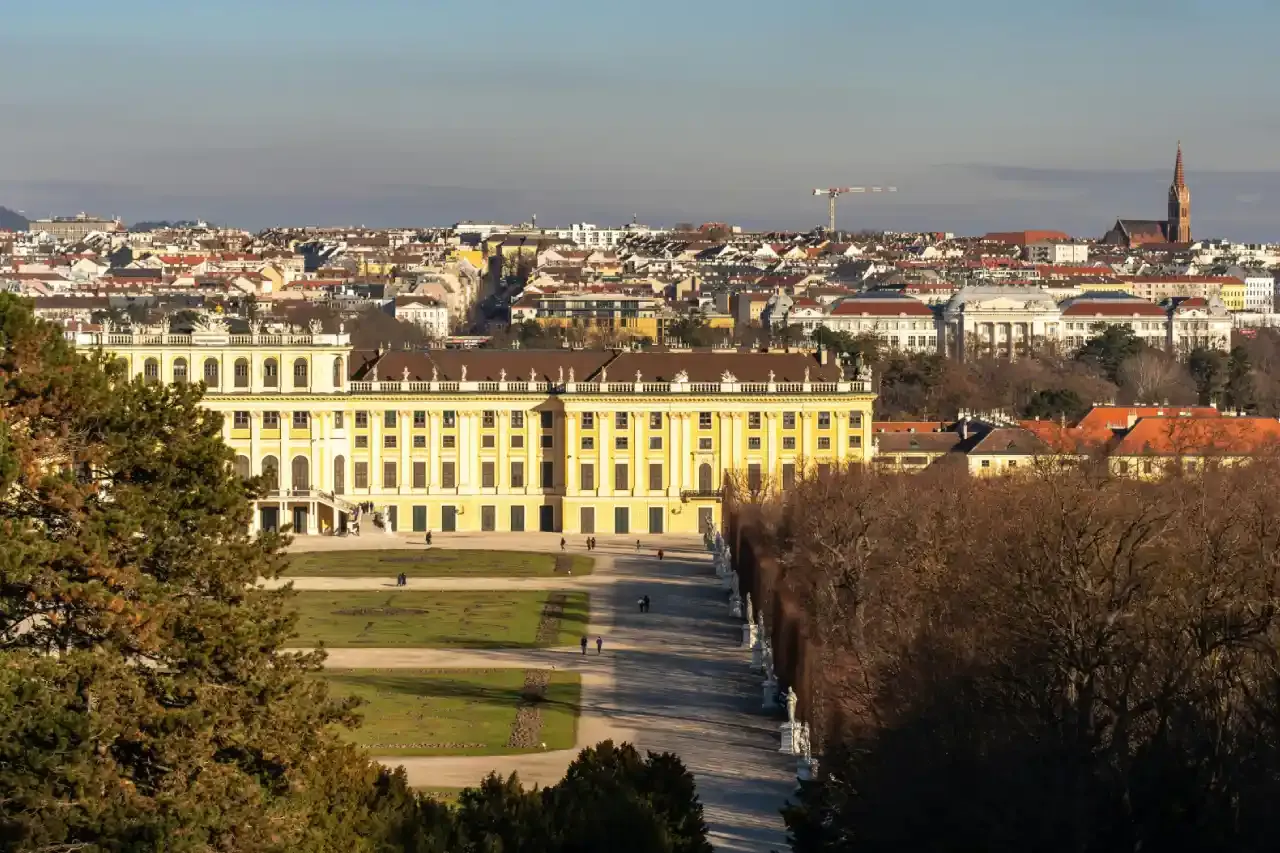
On almost every measure, Versailles is the bigger palace. It holds roughly 2,300 rooms to Schönbrunn's 1,441, and its estate spreads across about 815 hectares against a Schönbrunn park of roughly 160 hectares. Stand in the gardens of each and the gap is obvious: Versailles keeps unfolding toward the Grand Canal and the Trianon estate, while Schönbrunn draws a clear line at the Gloriette hill that closes the view.
That difference is written into why each palace was built. Louis XIV conceived Versailles as a stage for absolute monarchy and moved the entire French court there in 1682, so scale was the whole point. Maria Theresa reshaped Schönbrunn a few decades later as an imperial summer residence meant to echo Versailles, but on a Habsburg budget and a tighter city-edge plot. The result is grand without being exhausting.
For visitors, smaller often plays to Schönbrunn's advantage. Of its 1,441 rooms, 45 state and residential rooms on the bel étage are open to the public, and the Grand Tour route covers 40 of them at a comfortable pace. Versailles rewards stamina and a full day of walking; Schönbrunn can be seen properly, gardens included, in an afternoon.
Why is the Schönbrunn Palace so famous?
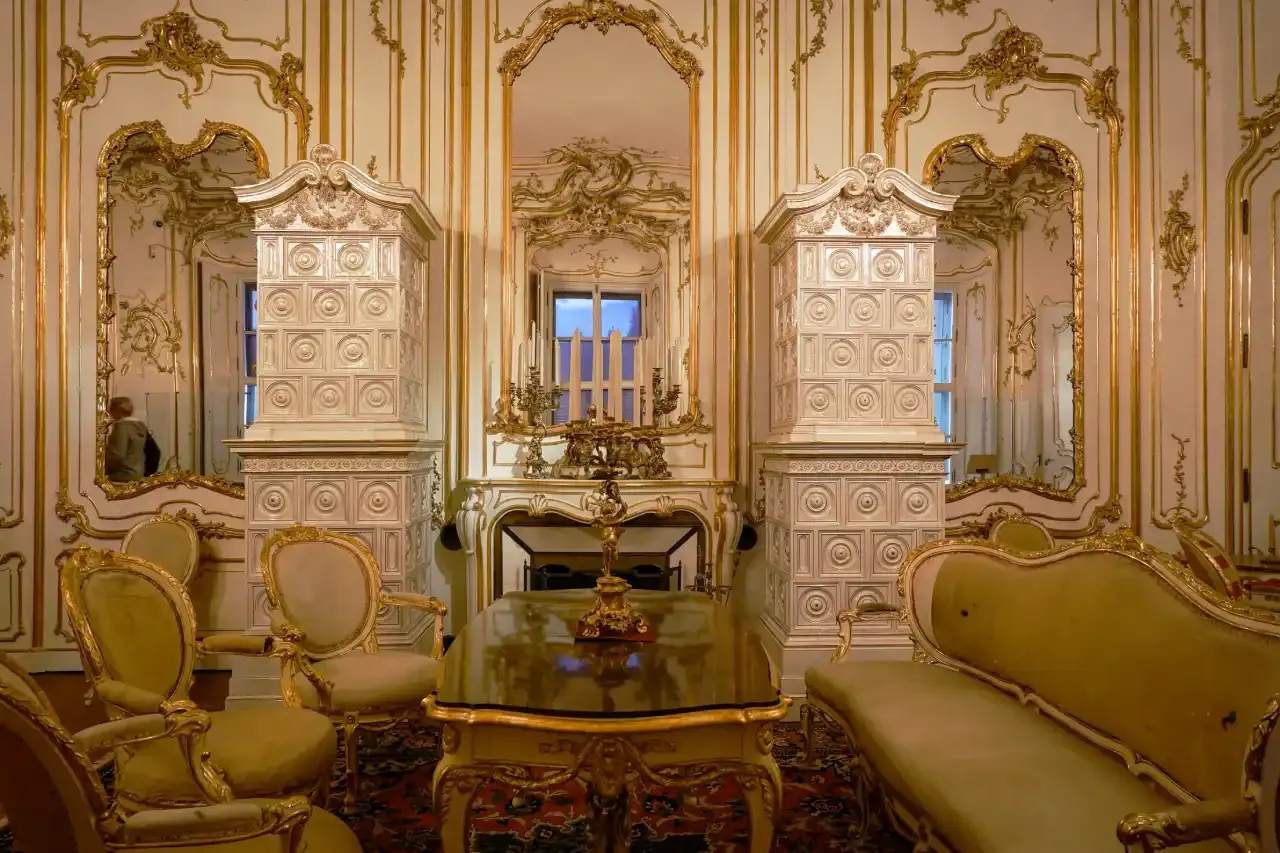
Schönbrunn is famous first as the summer heart of the Habsburg empire, which owned the estate from 1569 until the monarchy ended in 1918. Its brightest era began under Empress Maria Theresa, who from 1745 turned it into the hub of court and political life and gave its state rooms their glowing Rococo character. The palace and its gardens were added to the UNESCO World Heritage list in 1996.
The building also carries an unusual density of history. A six-year-old Mozart performed here for the imperial family in 1762, Napoleon used the palace as his headquarters when his armies occupied Vienna, and in 1961 its rooms hosted the summit between US President John F. Kennedy and Soviet leader Nikita Khrushchev. For many travellers it is also the palace of Empress Elisabeth, the beloved "Sisi", whose apartments are part of the tour.
Beyond the walls, the estate is a destination in its own right. The hilltop Gloriette, built in 1775 to glorify Habsburg power, crowns a sweeping view back over the parterre. The grounds also hold a hedge maze, the Palm House, and Tiergarten Schönbrunn, which opened in 1752 and is recognised as the oldest continuously operating zoo in the world. Few royal palaces pack this much into one visit.
How do the two palaces compare beyond size?
Scale is only one axis. On gardens, royal stories, interiors, and logistics, the two estates trade the lead, and this is where personal taste decides the winner.
Gardens and grounds
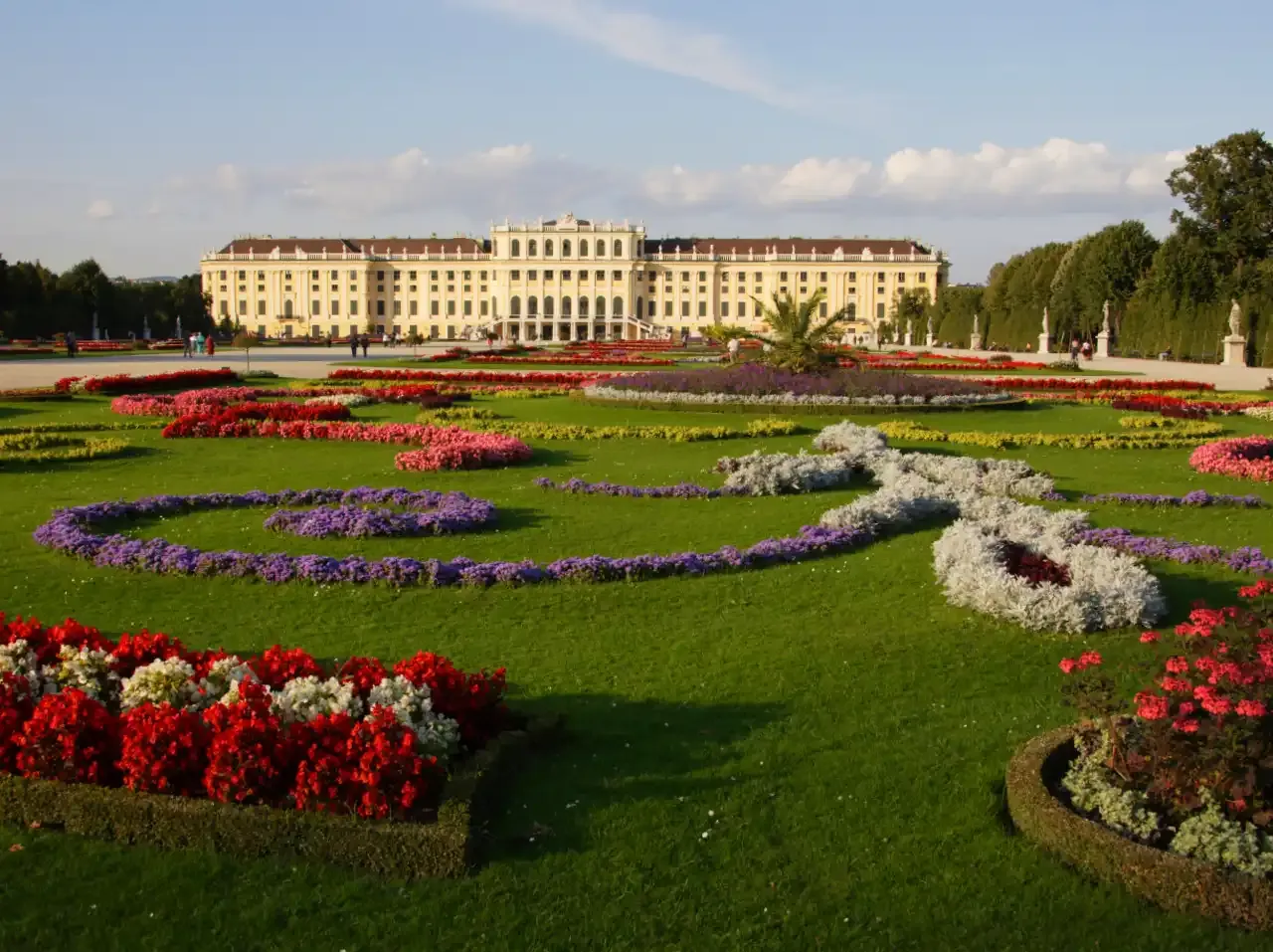
Schönbrunn's park is open to stroll without a palace ticket, and everything of interest sits within an easy walk: the Gloriette, the maze, the Palm House, and the oldest zoo in the world. Versailles answers with far grander formal gardens, the Grand and Petit Trianon, the Queen's Hamlet, and seasonal fountain shows set to music, though seeing them all involves serious distances on foot.
So, which palace should travellers visit?
Versailles is the stronger choice for travellers who want absolute scale, the Hall of Mirrors, and one of the most iconic sites in French history, and who are ready to spend a full, foot-heavy day outside Paris. It is the more monumental experience, and few views in Europe rival the sweep of its gardens toward the Grand Canal. Travellers set on the French palace can book Versailles Palace tickets and plan a full day across the estate.
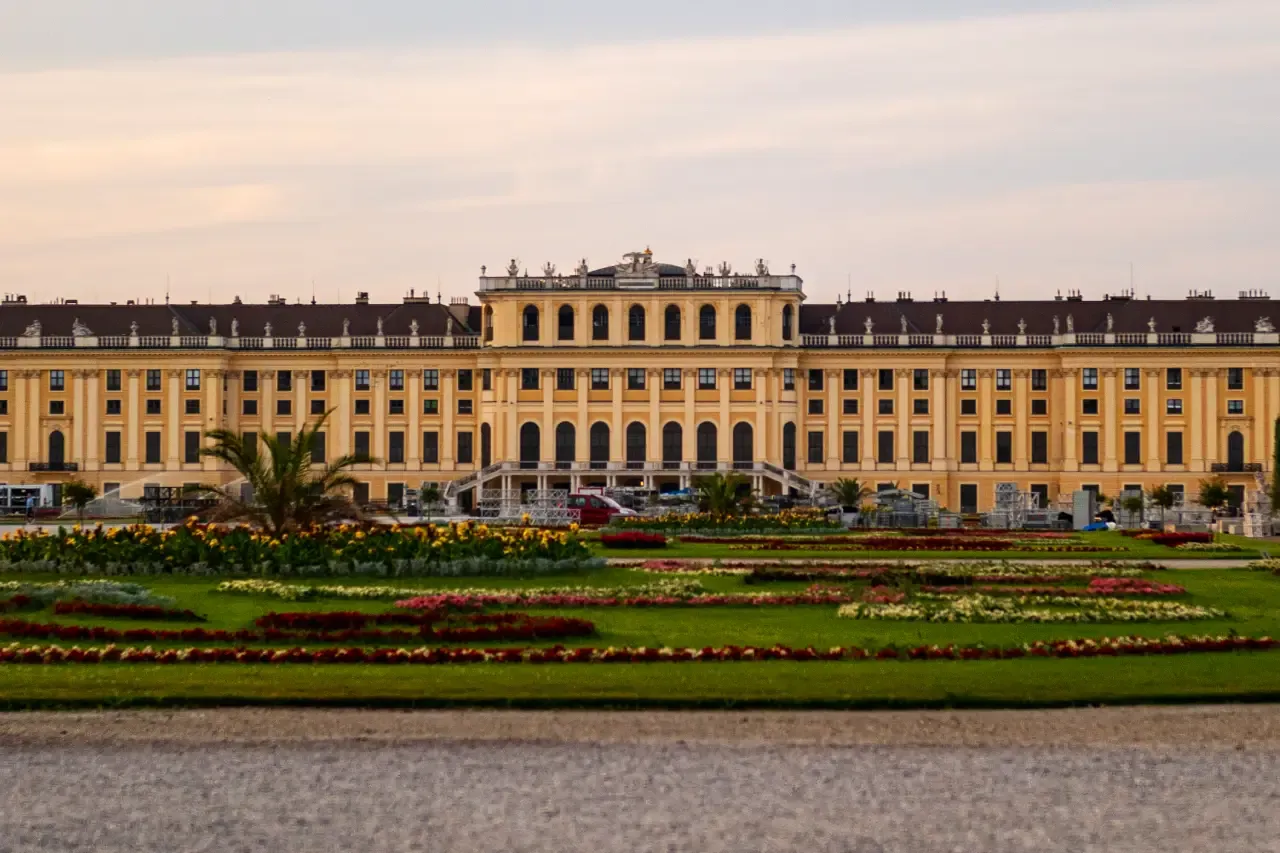
Schönbrunn suits travellers who prefer imperial splendour without the logistics: a Rococo palace, walkable gardens, a historic zoo, and a Gloriette view, all a short metro ride from the city centre. For most people building a Vienna itinerary, Schönbrunn is the easier and more rewarding pick, and visitors can book their Schönbrunn Palace tickets in advance to skip the queue.