Plan your visit to Belvedere Palace
Plan your visit to Belvedere Palace (Schloss Belvedere) starts here, ahead of any trip to the Baroque complex that the military commander Prince Eugene of Savoy raised in Vienna's 3rd district. The sections below cover opening hours, house rules, and the highlights of the Upper and Lower Belvedere.
Information about your visit to Belvedere Palace?
Planning a visit to Belvedere Palace means coordinating three separate buildings and a garden, each with its own hours and entry rules. The essentials are:
- What are the opening hours? The Upper Belvedere opens daily from 09:00 to 18:00, extending to 19:00 in peak seasons; the Lower Belvedere runs daily from 10:00 to 18:00; Belvedere 21 opens Tuesday to Sunday from 11:00 to 18:00, with a late Thursday until 21:00 and Monday closures outside public holidays.
- When is the last admission? All three buildings stop admitting visitors 30 minutes before closing, so the cutoff falls at 17:30 on standard days and 20:30 on Belvedere 21's late Thursdays.
- When do the gardens open? The Baroque gardens between the two palaces open earlier than the museums, on a schedule that shifts with the season.
- How do visitors get there? The complex has no visitor parking, so public transport works best; Tram D reaches Schloss Belvedere for the Upper Belvedere, and Tram 71 reaches Unteres Belvedere for the Lower Belvedere.
- How long does a visit take? A full visit runs about 3 to 4 hours, while the Upper Belvedere on its own takes 2 to 3 hours.
- When is it quietest? Weekday mornings between 09:00 and 10:00 stay calmest, and the shoulder seasons of April to May and September to October balance mild weather against manageable crowds.
- Is there a dress code? No formal dress code applies, but a mandatory cloakroom takes coats, jackets, umbrellas, backpacks, and large bags before entry to the galleries.
- Is the palace accessible? Both palace buildings have ramps, elevators, and wheelchairs, though the terraced garden path between them is not barrier-free.
Explore whatever you need in detail
Belvedere Palace spreads its practical information across several dedicated pages, each covering one part of the visit.
Home
Entry tickets, tour options, and the core visitor overview for the whole complex sit on the venue hub, the natural starting point for booking and orientation.
Opening hours
Daily and seasonal opening times differ across the Upper Belvedere, the Lower Belvedere, and Belvedere 21, along with the strict last-admission cutoff.
How to get
Tram, metro, and S-Bahn routes reach the complex, and the right stop depends on which of the two palaces comes first.
Parking
The palace has no visitor lot, so nearby garages and the surrounding short-term parking zones matter for anyone arriving by car.
Map & entrances
A layout of the Upper Belvedere, the Lower Belvedere, Belvedere 21, and the garden terraces helps visitors reach the correct entrance.
Inside / What to see
The galleries hold Klimt's paintings, the Baroque state rooms, and the medieval collection split between the two palaces.
About
Background on the palace as a Baroque monument and one of the world's leading art museums, worth reading before a visit.
History
The complex began in the early 18th century as Prince Eugene of Savoy's summer residence and later shaped modern Austrian history.
Comparisons
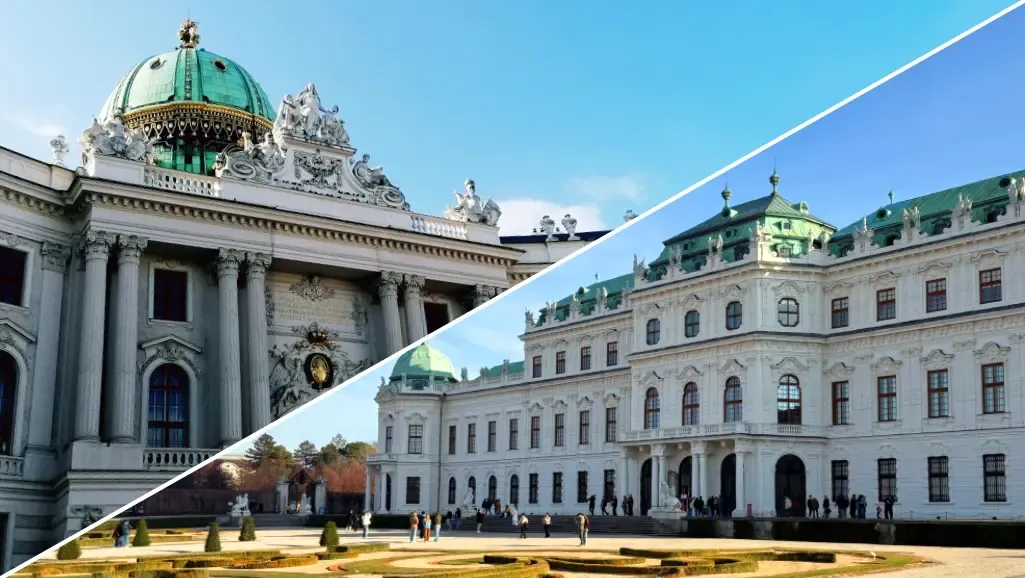
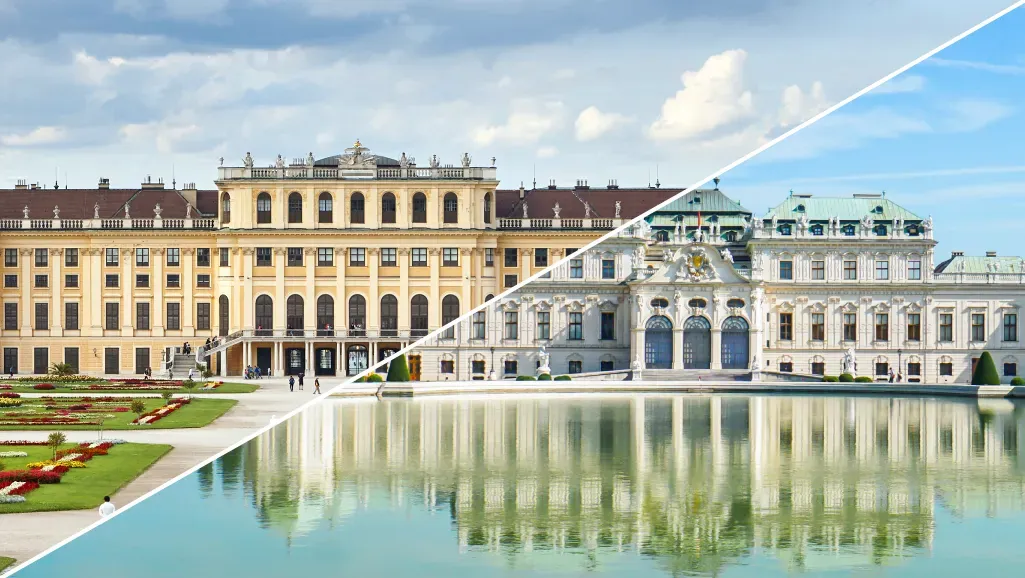
Choosing between Vienna's great palaces is a common question, and a side-by-side look sets an art museum against an imperial residence.
Where is the Belvedere Palace located?
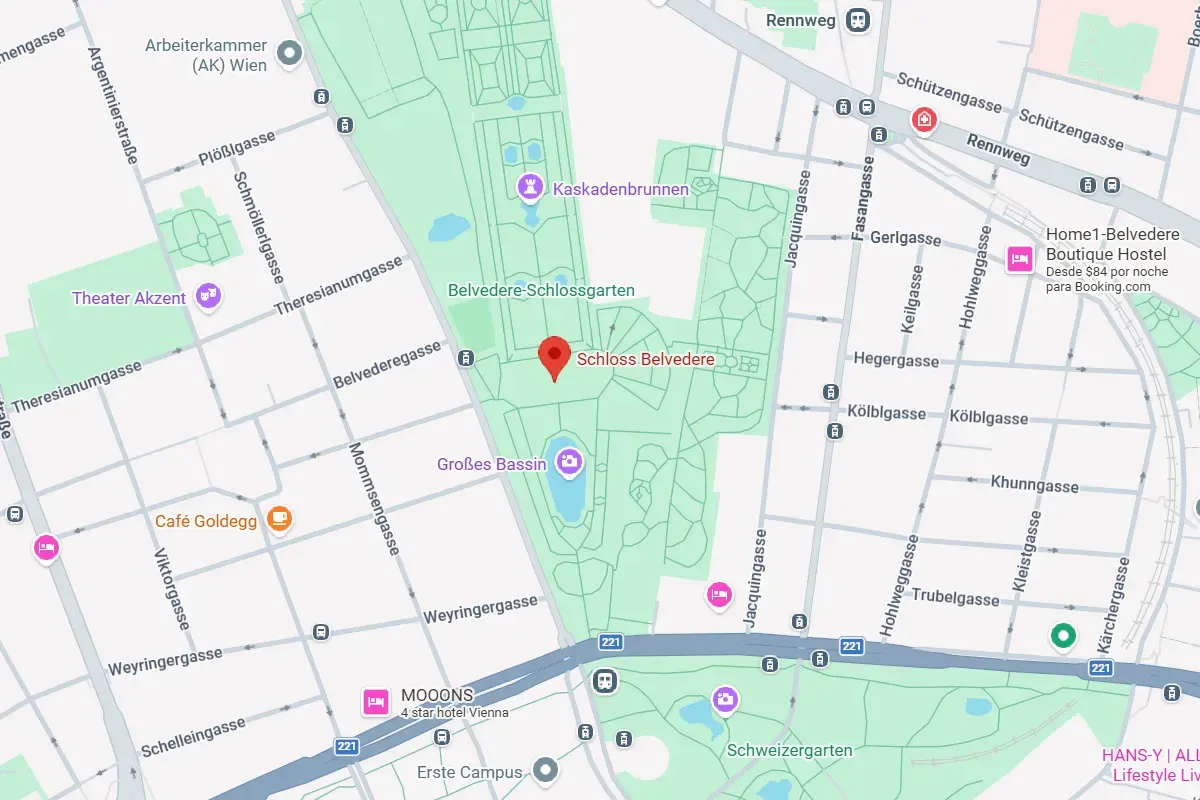
Where is the Belvedere Palace located?
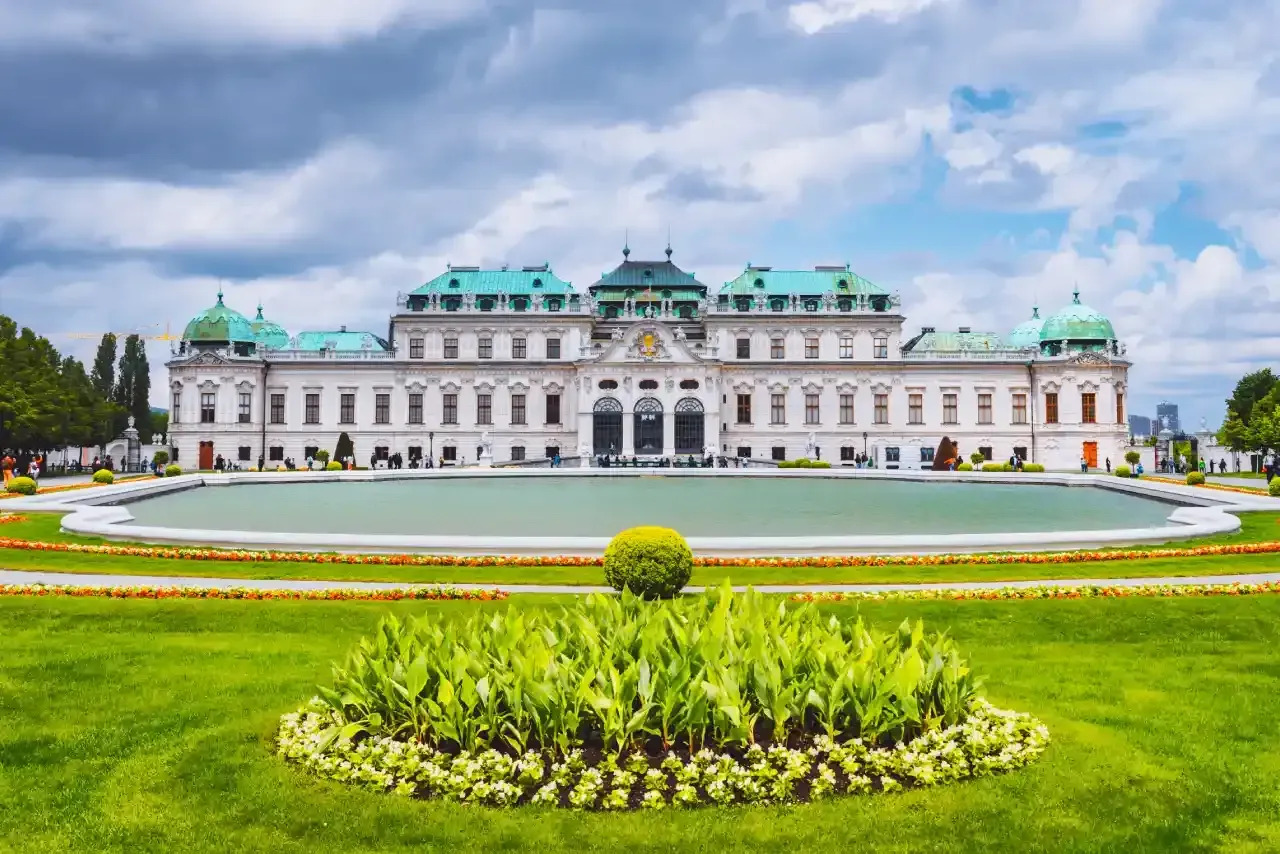
Belvedere Palace is not a single building but three separate ones in Vienna's 3rd district. The Upper Belvedere stands at Prinz-Eugen-Strasse 27, 1030 Vienna, the main gallery that holds Gustav Klimt's "The Kiss" and the complex's most important art collection. The Lower Belvedere sits at Rennweg 6, 1030 Vienna, once Prince Eugene of Savoy's residential palace and now the setting for rotating special exhibitions and the Baroque state rooms. Belvedere 21, at Arsenalstrasse 1, 1030 Vienna, concentrates on contemporary art and lies apart from the main complex. The formal Baroque gardens link the Upper and Lower palaces across three terraces on a marked slope, with the Lower Belvedere at the bottom and the Upper Belvedere crowning the hilltop.
Book your ticket to Belvedere Palace
Belvedere Palace tickets cover timed entry to the Upper Belvedere, the Lower Belvedere, or both, and booking ahead secures a specific entry slot during busy periods. A hand-picked selection sits below, and visitors can compare the options and confirm dates on the Belvedere Palace tickets hub before they travel. Check availability to lock in an entry time.
What to see at Belvedere Palace
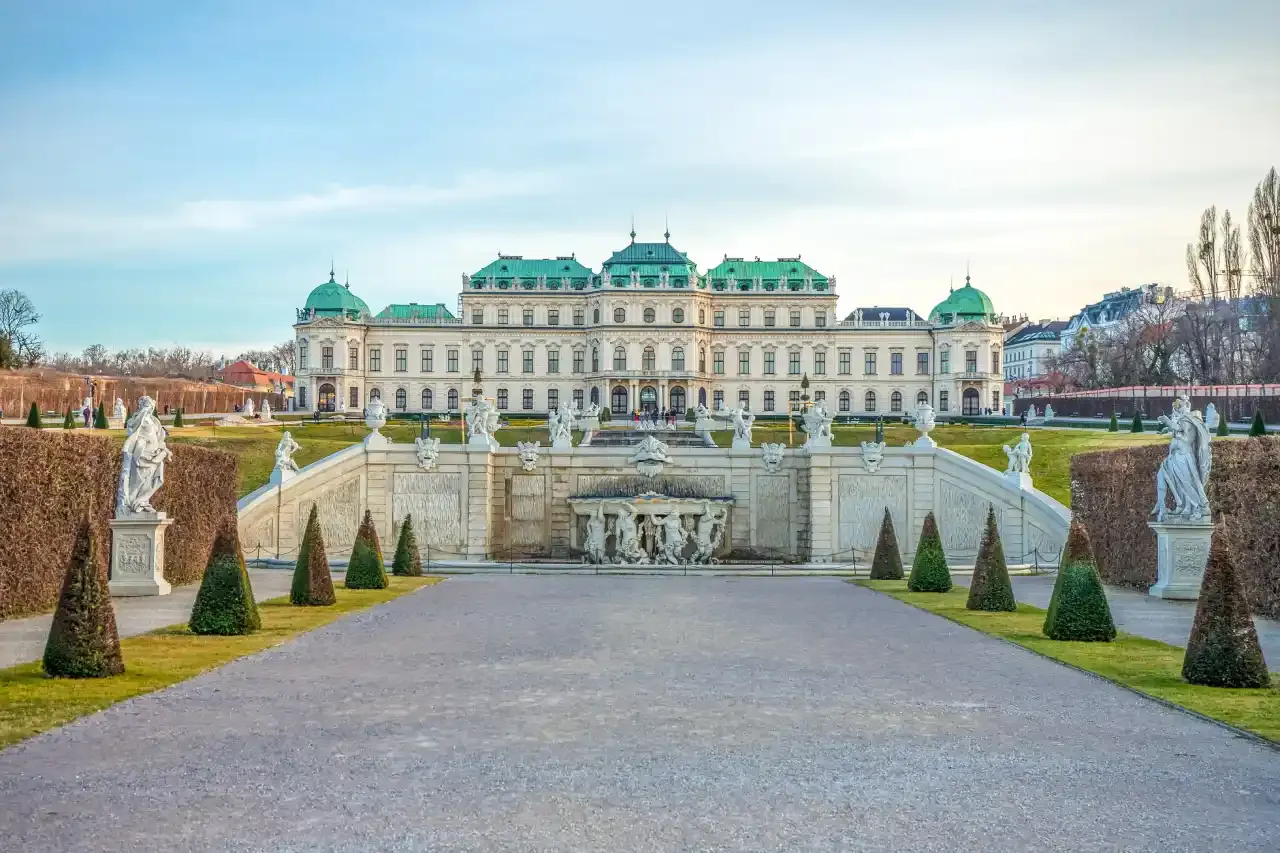
Belvedere Palace holds two contrasting art experiences across its main buildings. The Upper Belvedere houses Austria's most important art collection, including the world's largest set of Klimt oil paintings, among them "The Kiss" and "Judith". The Lower Belvedere, once Prince Eugene of Savoy's residence, keeps its original state rooms as settings for high-profile temporary exhibitions. Between the two palaces, the terraced Baroque gardens open onto sculptures, fountains, and long views over Vienna. The highlights below single out the works and spaces that define a visit.
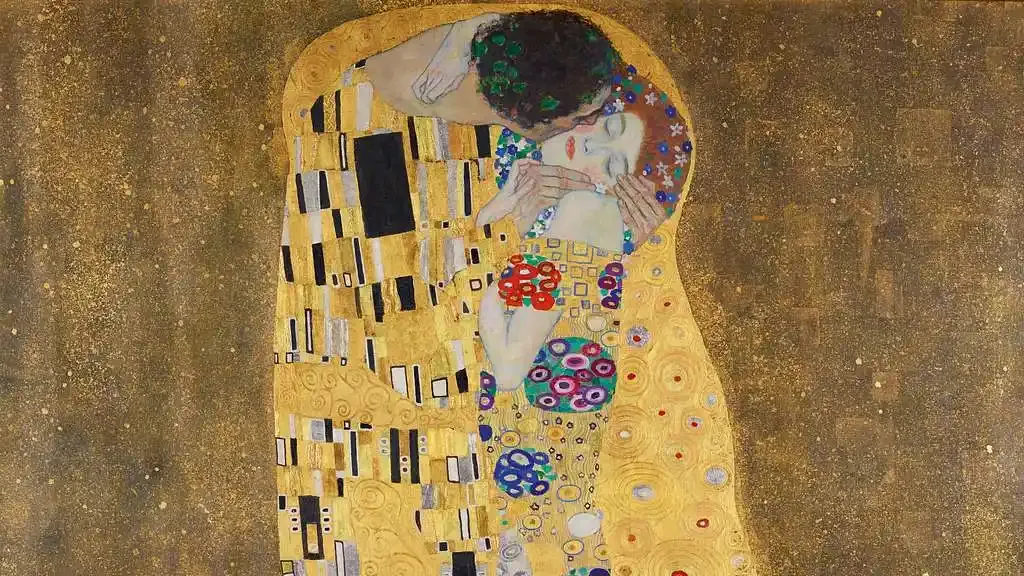
"The Kiss", by Gustav Klimt
"The Kiss" (Der Kuss), the gold-leaf painting Gustav Klimt completed in 1908, hangs on the first floor of the Upper Belvedere inside the gallery devoted to Vienna around 1900. The 180 by 180 centimetre canvas shows two lovers wrapped in patterned robes on a flowering meadow, their forms dissolving into a field of gold. Klimt borrowed the technique from Byzantine gold mosaics seen on his travels to Ravenna, and the work crowns the Golden Period that made him the defining figure of the Vienna Secession. The painting remains a symbol of Austrian cultural identity and the museum's most sought-after holding. Most visitors spend 15 to 20 minutes in this gallery, which grows crowded by late morning.
Marble Hall
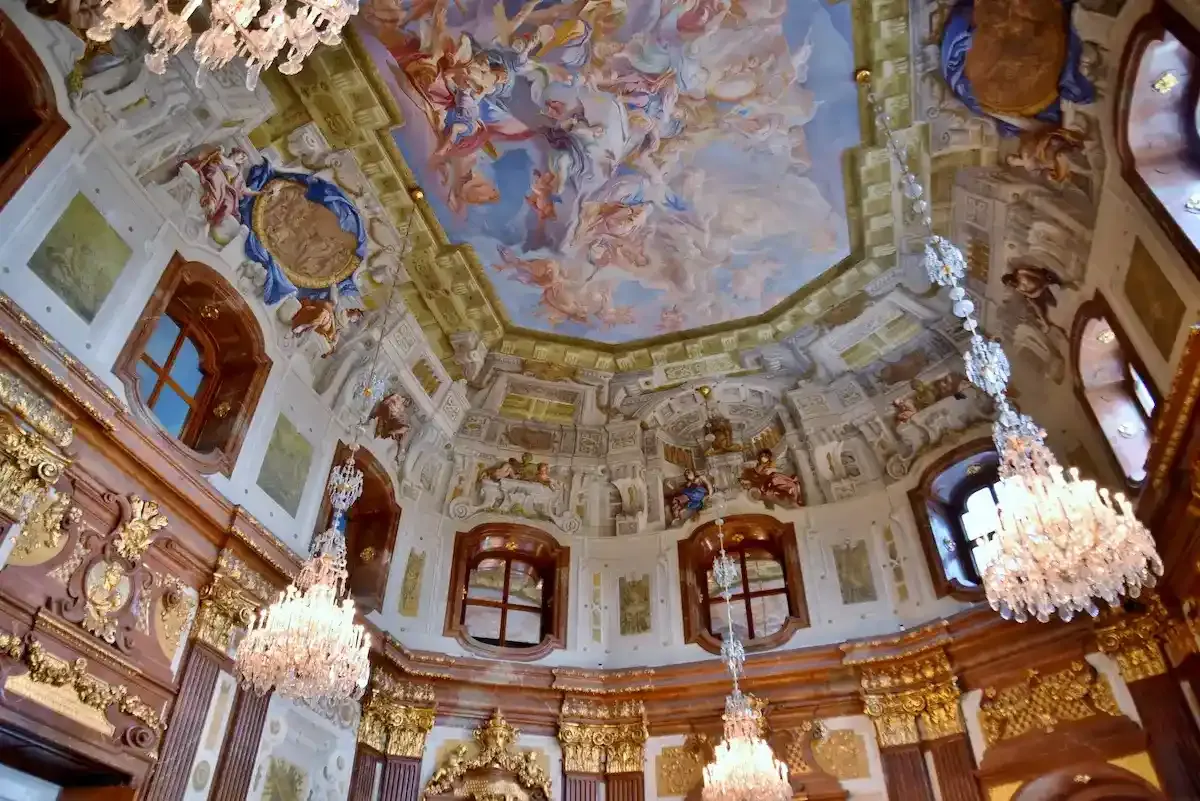
Marble Hall
The Marble Hall (Marmorsaal), the ceremonial hall at the centre of the Upper Belvedere, rises through two storeys behind walls of reddish marble and gilded ornament. Carlo Carlone received the commission for its ceiling fresco in 1720 and painted it between 1721 and 1723, a swirling composition that celebrates the military victories of Prince Eugene of Savoy, and a quadratura technique makes the painted architecture seem to open into the sky. Officials signed the Austrian State Treaty in this hall on 15 May 1955, ending the postwar Allied occupation and restoring Austria as a sovereign, democratic state. Its tall windows frame a symmetrical view over the gardens toward Vienna. A pause of 10 to 15 minutes covers the hall.
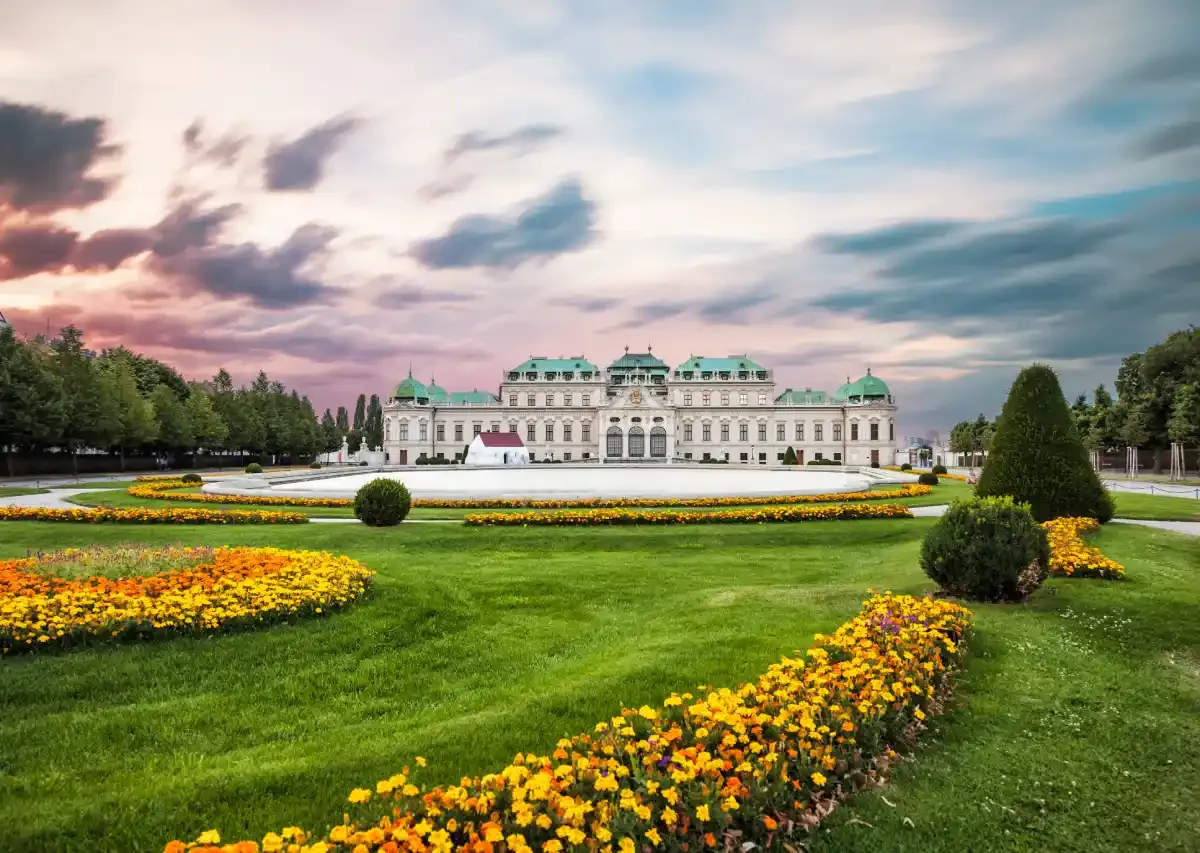
Belvedere Gardens
The Belvedere Gardens, laid out by the architect and engineer Dominique Girard, connect the Upper and Lower palaces along a formal French Baroque design. Girard trained in the Versailles tradition, arranging the grounds as symmetrical parterres set with fountains, water cascades, and mythological sculptures. Three broad terraces step down the natural slope, so the walk between the palaces doubles as a viewing platform. From the upper terrace, the layout frames both palace facades and the Vienna skyline in a single sweep, a panorama many visitors rate as the highlight of the whole complex. A stroll through the gardens takes 30 to 45 minutes.
Busts by Franz Xaver Messerschmidt
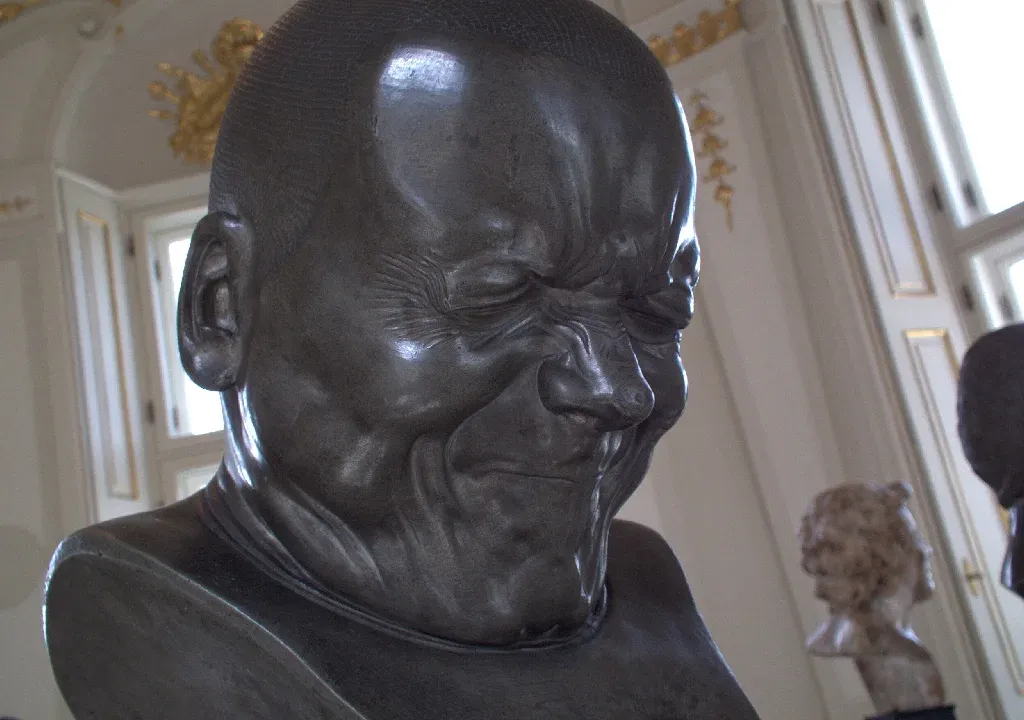
Busts by Franz Xaver Messerschmidt
The Character Heads, a series of busts by the sculptor Franz Xaver Messerschmidt, rank among the strangest works in the Belvedere. Messerschmidt cast them in a tin-lead alloy or carved them in alabaster during the later 18th century, turning away from the smooth idealism of Neoclassicism to study human physiognomy and raw emotion. Each head fixes a single extreme state, from a wide yawn to clenched pain or forced laughter, pushing facial expression to the edge of caricature. Art historians read the series as a hinge toward realism and the psychological study of the face. Up close, the busts show precise anatomical detail and the marks of Messerschmidt's casting technique. Ten to fifteen minutes covers the display.
Tips for visiting Belvedere Palace
A smooth visit to Belvedere Palace comes down to timing, routing, and a few house rules that catch newcomers off guard. The following tips help travelers plan ahead:
- Book a timed entry online before arriving, since the Upper Belvedere can reach capacity in peak season and the ticket desk queue can run long.
- Aim for the first hour after opening, between 09:00 and 10:00 on a weekday, to see "The Kiss" before tour groups fill the Vienna 1900 gallery.
- Watch the last-admission cutoff, set 30 minutes before each building closes, so a late arrival does not lose the visit.
- Start at the Upper Belvedere and walk downhill through the gardens to the Lower Belvedere, the route that follows the natural slope.
- Deposit coats, jackets, umbrellas, backpacks, and large bags at the cloakroom, which is mandatory before entering the galleries.
- Travel by tram rather than car, taking Tram D to Schloss Belvedere, because the complex has no visitor parking.
- Consider the shoulder seasons of April to May or September to October for the best balance of weather and space.